IceNucleationbyLahoreSmogParticles
An ice nucleation study of South Asian urban aerosol, a source with very few published measurements.
Scroll the story ↓
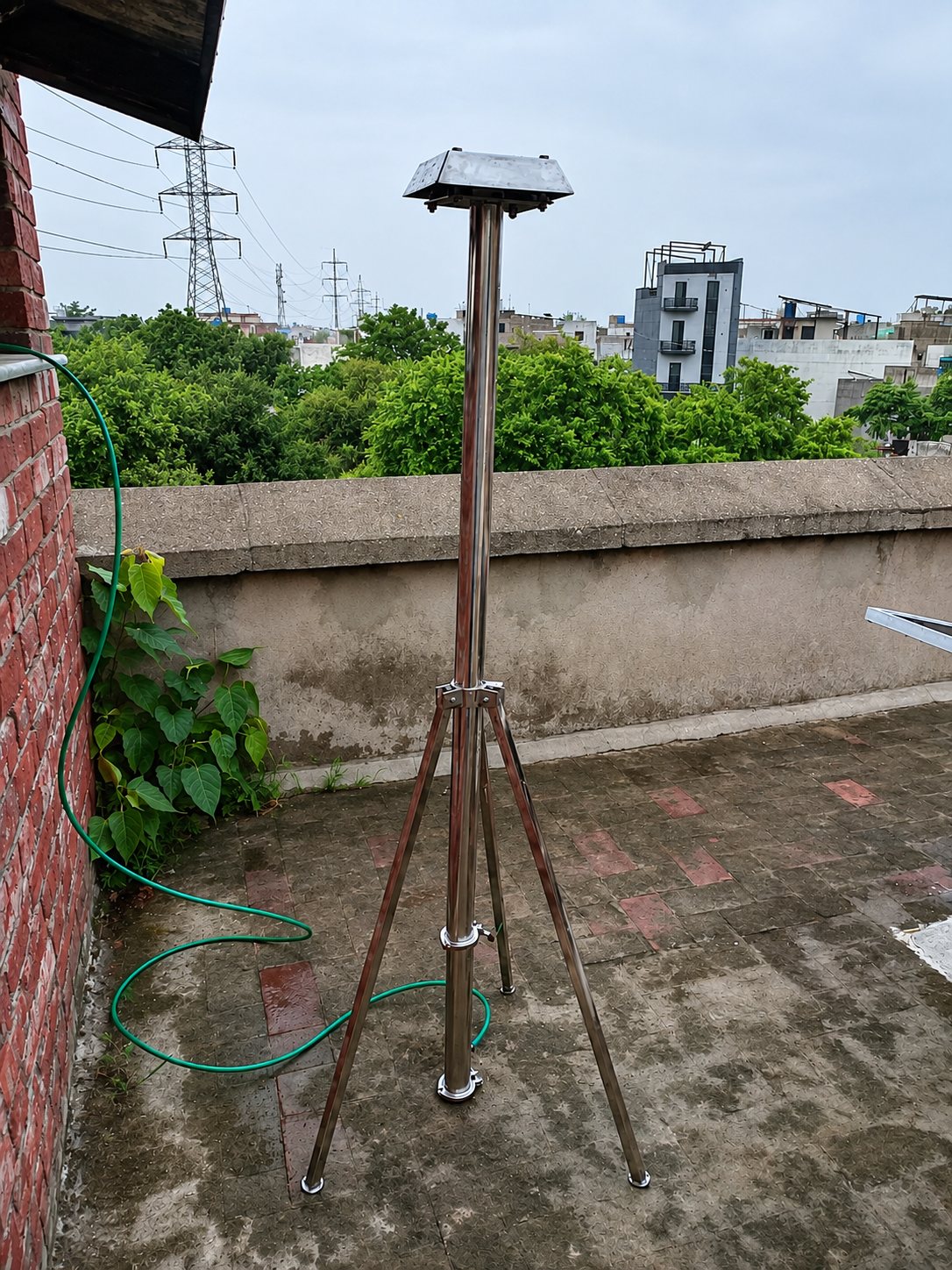
A sampler built from scratch
A custom rooftop high-volume sampler — welded steel frame, sheltered inlet, PTFE membrane filters. Running at 15 L/min for 24 h draws 21.6 m³ of air through each filter. It collected ~1.1 mg of mass — about 51 µg/m³ over 24 h, more than 3× the WHO 24-hour PM2.5 guideline — sampled through the November 2024 smog season.

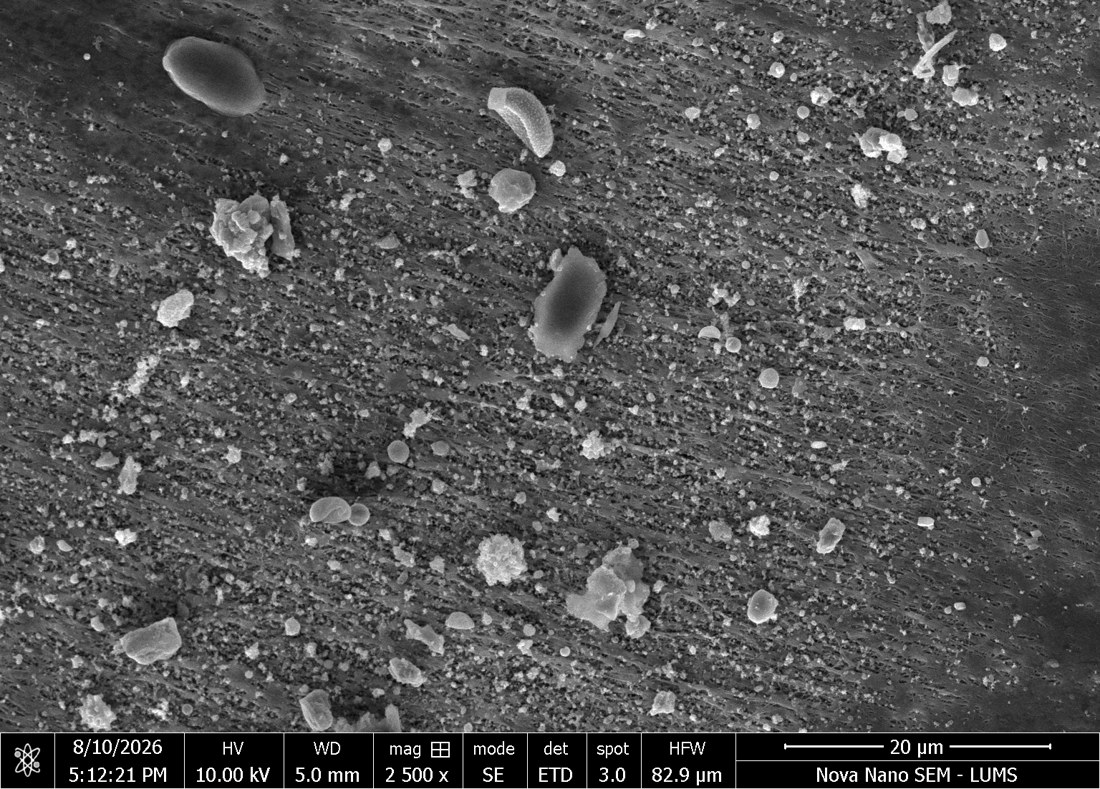
Discrete particles, not a smear
Electron microscopy shows particles sitting individually on the filter fibres — not a continuous smear, which is what makes single-particle analysis possible. Combustion nanospheres, consistent with soot, run 15–75 nm; the largest mineral grains observed reach 3–5 µm. (FEI Nova NanoSEM, 10 kV.)
Full SEM/EDX result, size distribution & soot images →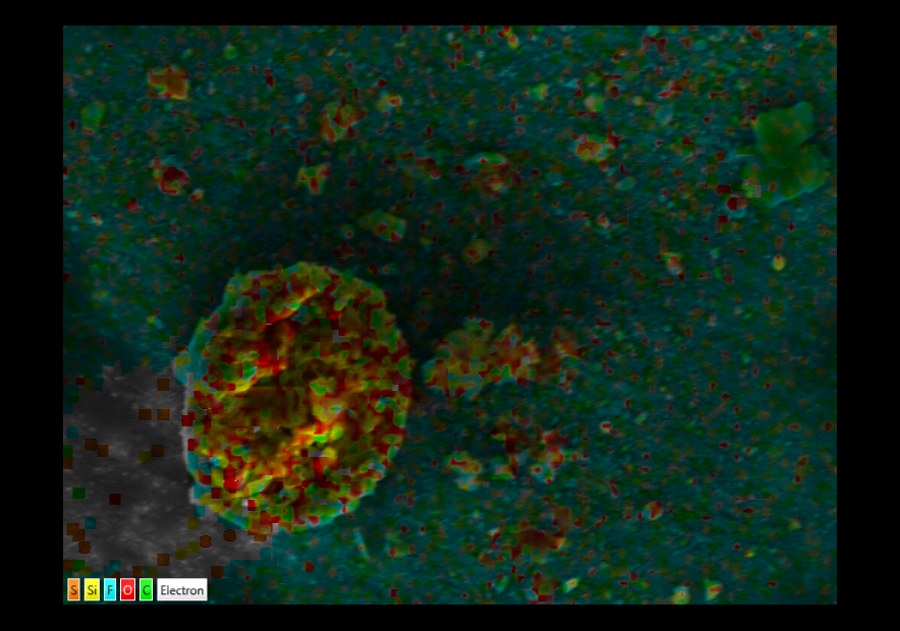
Two signatures, two sources
A suite of elements appears on the loaded filter and is absent from the control. Two signatures stand out: alumino-silicate mineral dust and sulphur from combustion as sulphate. The potassium alongside the alumino-silicates is consistent with K-feldspar — the most ice-active mineral commonly found in desert dust — but EDX gives elements, not mineral phases, so that remains an inference; confirming it would need diffraction (XRD or electron diffraction). Potassium is also a biomass-burning tracer, which makes the attribution less clean. Zinc points to traffic.
| Si | Silicon | Silicate mineral dust |
| Al | Aluminium | Alumino-silicate mineral dust |
| K | Potassium | K-feldspar (inferred) or biomass burning |
| Ca | Calcium | Crustal / road dust |
| Fe | Iron | Crustal dust |
| S | Sulphur | Combustion sulphate |
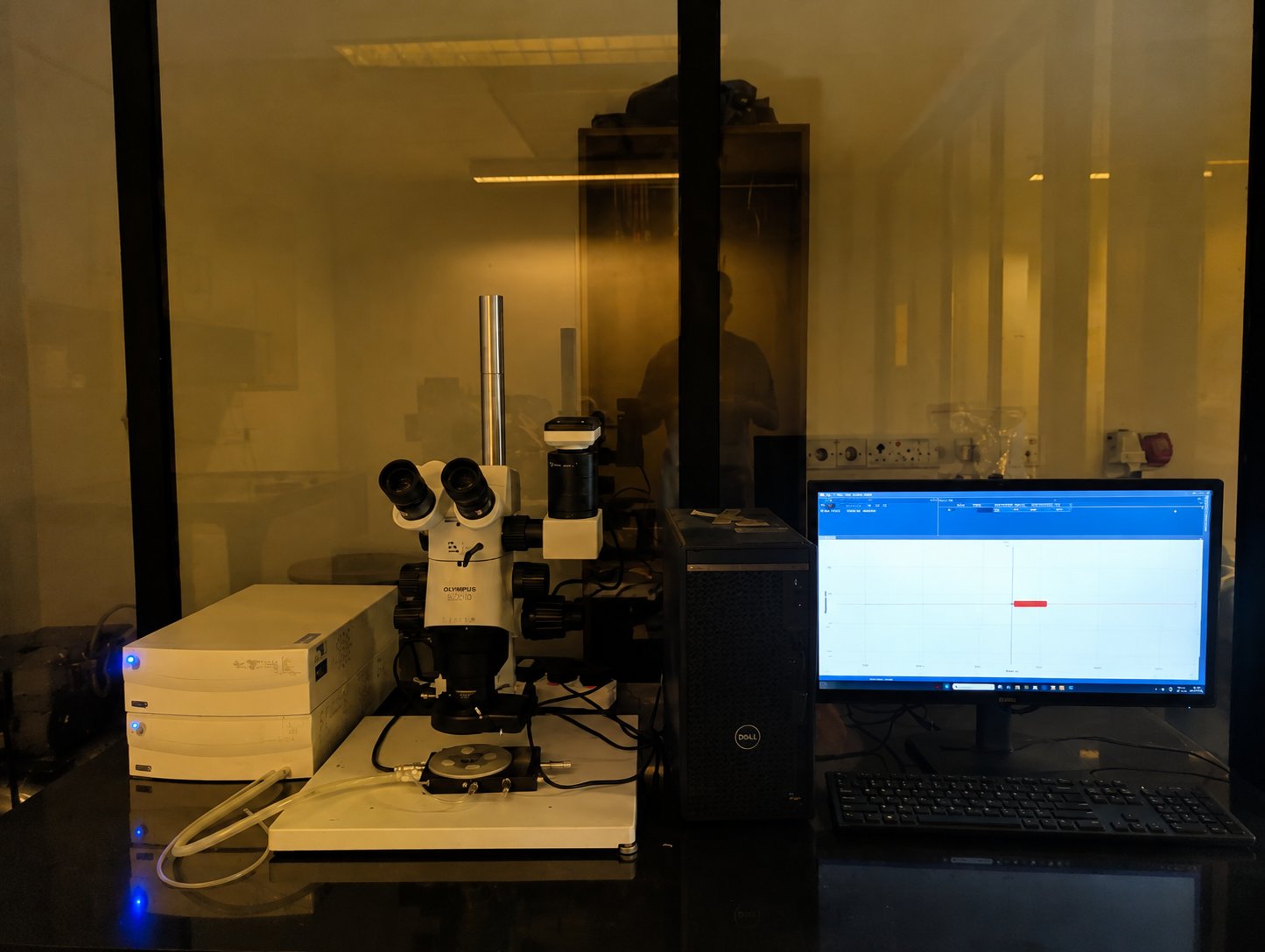
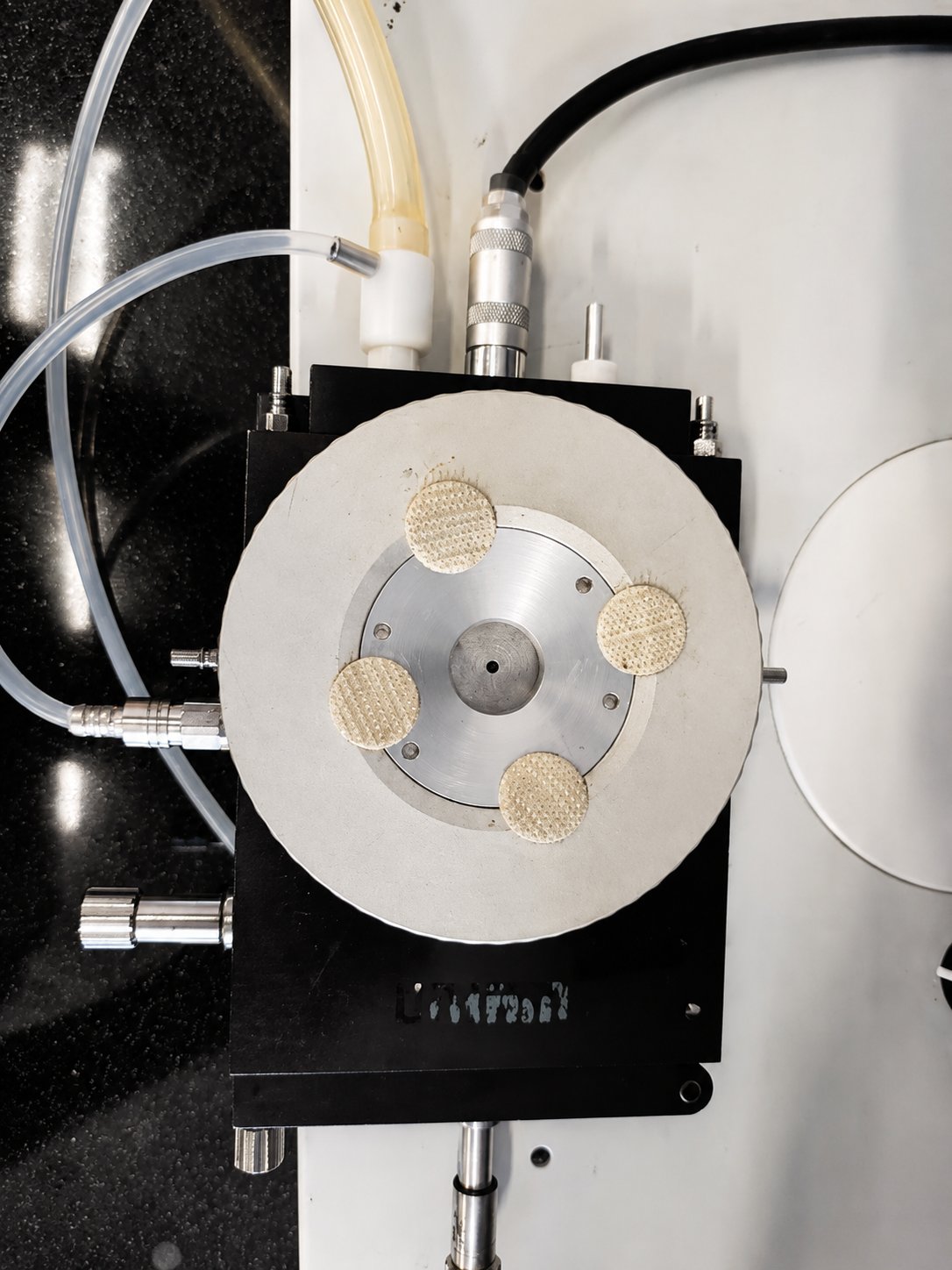
A droplet-freezing assay, developed in-house
The assay runs on a commercial Linkam T95 cold stage with LNP95 liquid-nitrogen cooling, stable to ±0.1 °C; what was developed in-house is the measurement around it — sample preparation, surface, and protocol. 1 µL droplets sit in a grid, 6–10 per run; freezing is identified by eye from recorded video as each droplet turns from transparent to opaque. A two-stage ramp — 20 °C/min to −10 °C, then 1 °C/min to −40 °C — with a 0.5% DMOAP silane coating for a stable hydrophobic surface.
Pure-water baseline, before vs after moving to a cleanroom.
The tell was the scatter, not the temperature
Early pure-water runs froze at −23.3 °C with ~7 °C of scatter. Moving the setup into a cleanroom dropped the baseline to −28.4 °C and cut the spread below 3 °C. That the reproducibility improved as much as the temperature was the clue. The most likely explanation is that the early signal was ambient ice-nucleating particles from ordinary lab air getting into the samples, rather than a property of the water — though I did not identify the contaminants directly. Diagnosing and controlling that systematic error is what made the real result trustworthy.
Smog freezes water 10.7 °C warmer
Pure water froze at a median −28.4 °C (±1.1); Lahore smog at −17.7 °C (±0.9) — a reproducible 10.7 °C shift. Published measurements from other polluted urban sites report freezing in a broadly similar range, and Lahore sits with them.
My data: droplet-freezing spectrum
Fraction of 12 droplets frozen as they cool. Lahore-smog droplets freeze about 10.7 °C warmer than pure water — direct evidence of active ice-nucleating particles in the smog.
Source: Ice Nucleation Induced by Lahore Smog Particles — MS Physics thesis · LUMS · 2025 · Fig. 4.5. Pure water's homogeneous-freezing limit is ≈ -38 °C; a cleanroom move sharpened the pure-water result from -23.3 °C to -28.4 °C.
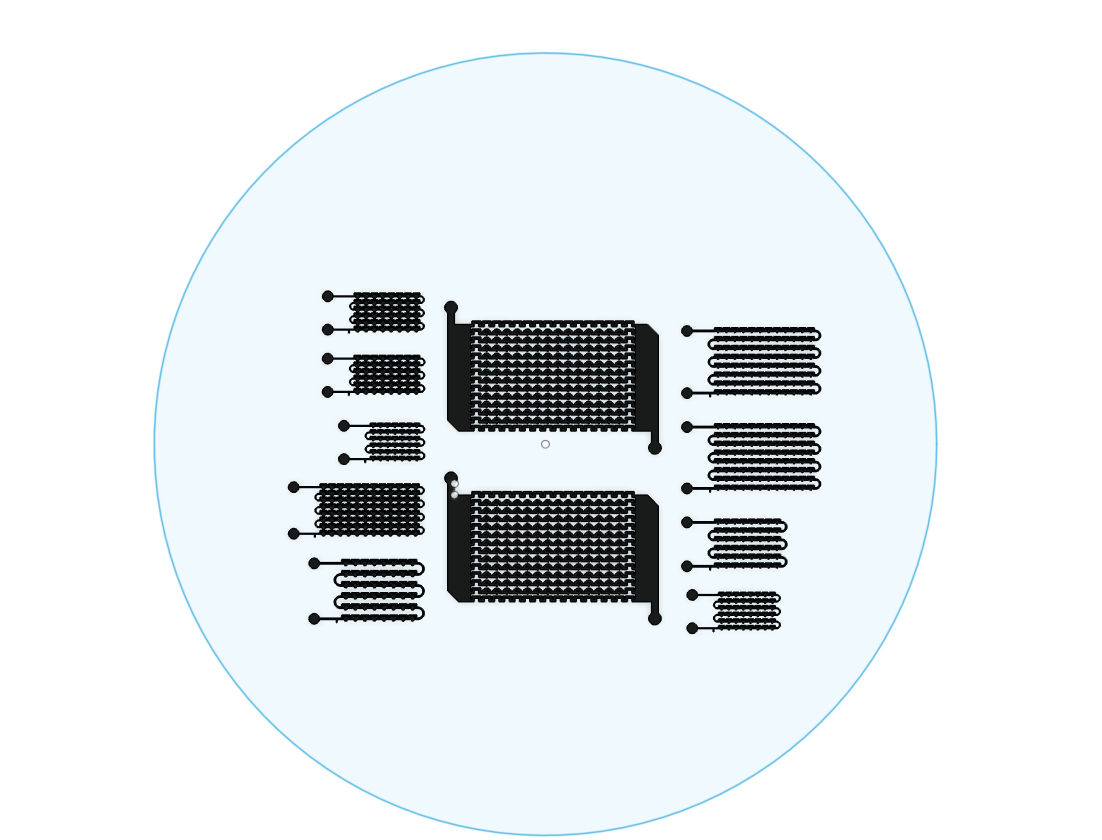
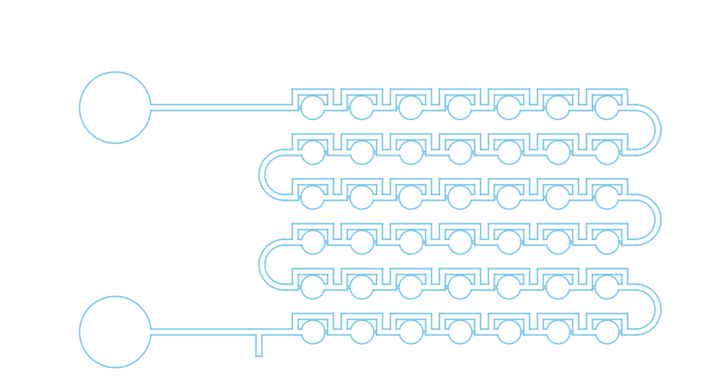
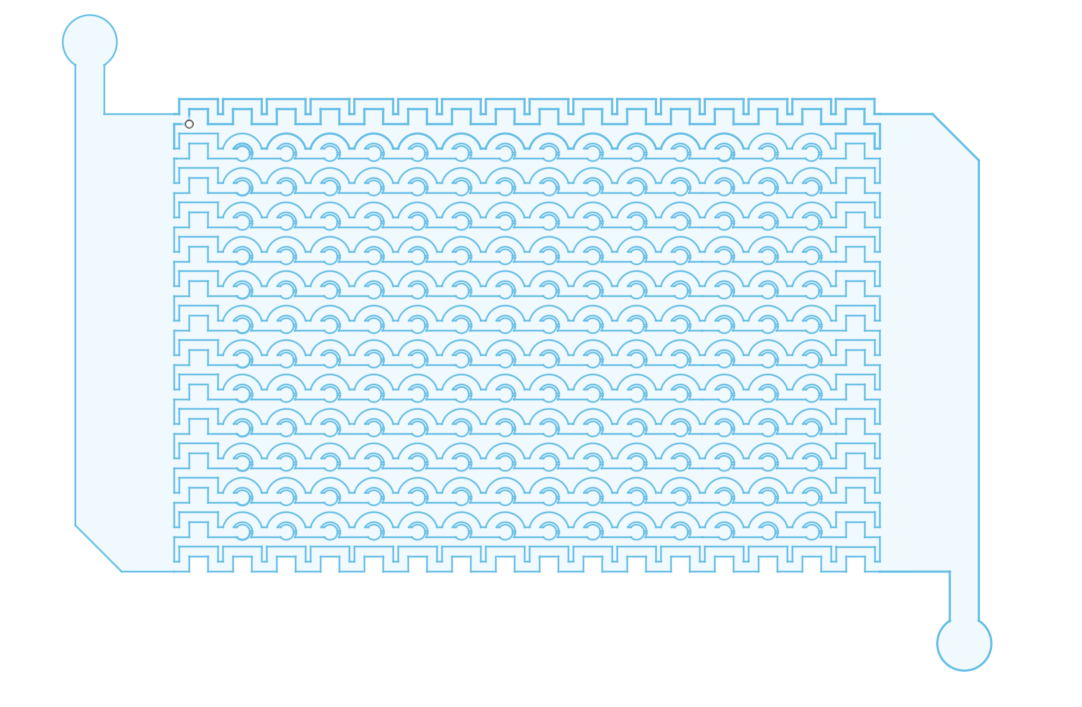
Developing the microfabrication process
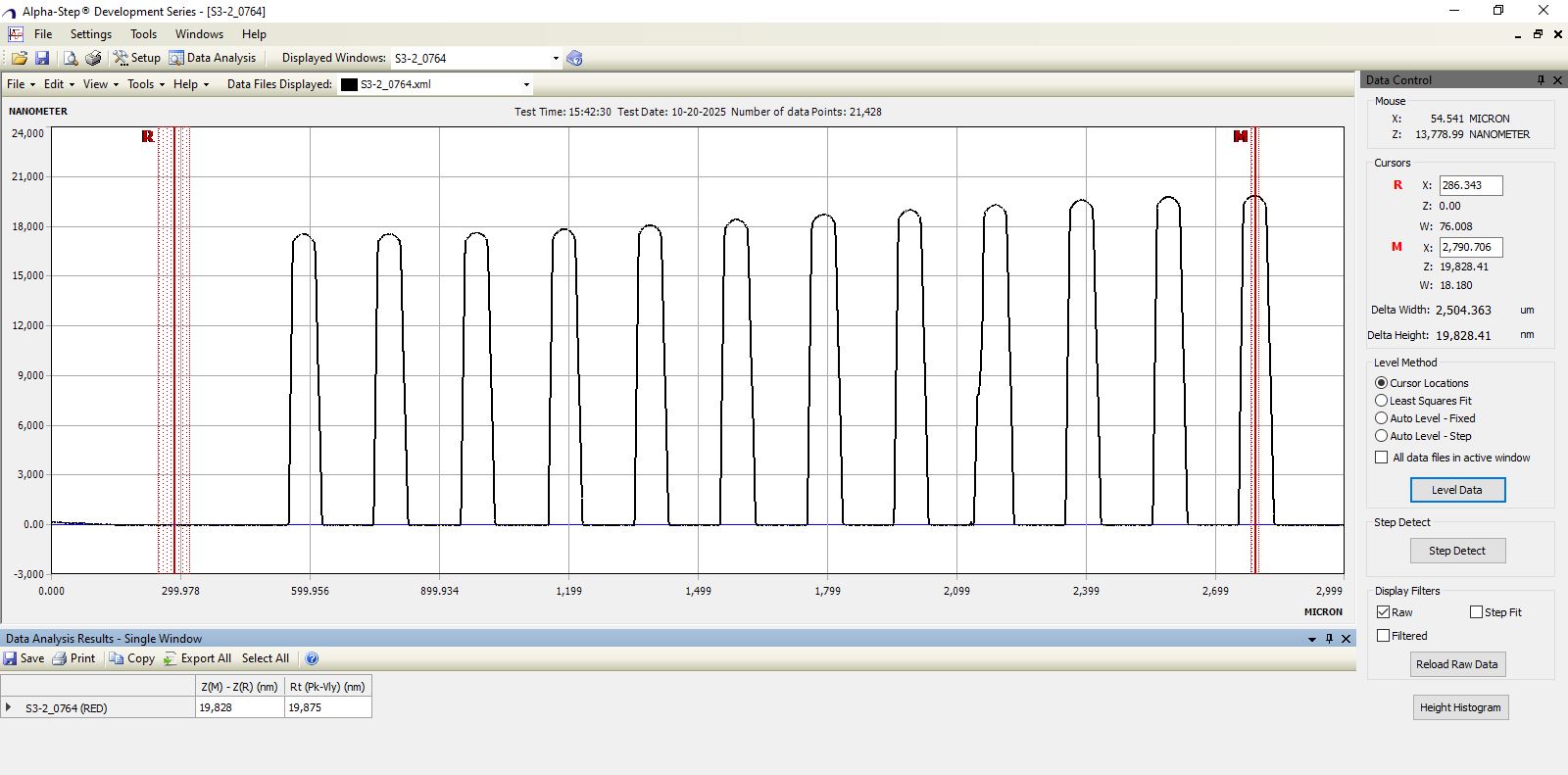
To beat the 6–10 droplet statistical ceiling, I designed high-density arrays — eleven geometries on one photomask plate (deliberately redundant), among them a 168-well array and a 42-well “crystal hotel”. These are designs on the mask, not yet built as devices. The SU-8 process was refined to 19.8 µm against a 20 µm target with under 0.5 µm variation across the points measured (UV exposure cut to 4.6 s, staged soft bakes, controlled development). The recipe was validated; the full device was still in fabrication when the project ended.
Designed ice nucleators
With the Jonathan Bath group at the Clarendon Laboratory, Oxford, I'm exploring DNA origami as ice nucleators — where the geometry is chosen rather than inherited, making a designed nucleator a potentially better calibration standard. My contribution: folding by controlled thermal annealing, gel electrophoresis to confirm assembly, dynamic light scattering for size, and sonication to break up aggregates. Freezing measurements are in progress.